

Summary
This article is part of Elevatus Training’s Sexual Rights series. Download the full Sexual Rights Toolkit to explore all 10 rights with activities for self-advocates and supporters.
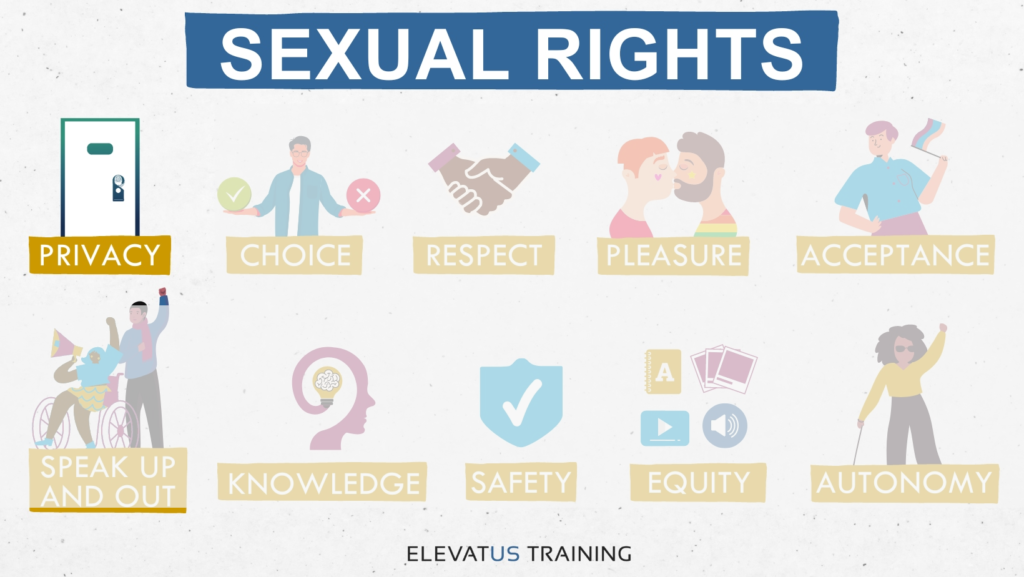
Privacy is a basic human right, but people with intellectual and developmental disabilities (I/DD) are often denied it — especially around sexuality and relationships. This article explains how privacy gets taken away, sets a learning objective for self-advocates and professionals, and offers three ways to respect and protect privacy.
Why Is Privacy a Sexual Right?
Privacy is a human right. Health Insurance Portability and Accountability Act (HIPAA) laws give us this right regarding our health information, but when people with intellectual and developmental disabilities (I/DD) receive services, others, or even ourselves, may forget about this right.
Self-advocates state that if anything is going on in their lives regarding sexuality, everyone knows about it and talks about it. If they mention wanting privacy with a partner, “a team meeting is called,” and they suddenly have no privacy regarding their personal information.
Self-advocates also speak of not having privacy in their rooms to be alone or with others. They are taught what is private but don’t have privacy. To teach privacy, we need to give and demonstrate privacy.
“I have the right to privacy in showing and sharing my sexuality.”
Learning Objectives: Recognizing How Privacy Is Taken Away
For self-advocates: to receive privacy and explore how it can be taken away.
For professionals: to examine in what ways privacy is taken away from individuals.
3 Ways to Respect and Protect Privacy
Don’t Share Others’ Stories
Think about what information is private, such as health, bodies, being sexual with another person, dreams, goals, etc. This information belongs to the person and is their own story to tell. It is not okay to share others’ personal or private information without their permission. Self-advocates have the right to privacy.
Reflect on a Privacy Violation
Think about a time that your privacy was violated. Ask yourself:
- What happened?
- What did that feel like?
- What is the assumption the person is making about you?
- How does that feel?
Treat People as People, Not Objects
There are many stories of people with disabilities at a doctor’s visit, and the doctor brings in a handful of students to learn without asking the “patient” if it is okay. It is almost as if we forget the person is actually a person and not an object. Don’t forget that people with disabilities have the right to privacy and want the same thing as others.
Why Privacy Builds Respect and Self-Esteem
Giving privacy shows respect, and when people feel respected, it builds self-esteem. As a professional, being curious and wanting to learn is an excellent quality, but it isn’t okay at the expense of someone else’s privacy and dignity. When people have privacy, they get to decide what happens with their private lives and information, not others.
Self-Reflection: Are You Respecting Privacy?
Remember, privacy is everyone’s right.
For self-advocates: Do you feel your privacy is being respected? If not, how can you speak up?
For professionals: In what ways might you have taken away a person’s privacy? And, in what ways are you supporting the right to privacy in the people you support?
Ready to take action?
- Browse Elevatus Curricula & Online Workshop Series
- Become a Sexuality Educator
- Complete One of Our Self-Study Courses
- Register for Upcoming Workshops
By Katherine McLaughlin
Katherine McLaughlin, M.Ed., AASECT Certified Sexuality Educator, is the Founder, CEO, and Lead Trainer for Elevatus Training. She has been a sexuality educator and trainer for over 30 years. As a national expert on sexuality and intellectual and developmental disabilities, she trains professionals and parents, as well as people with I/DD, to become sexual self-advocates and peer sexuality educators.
