

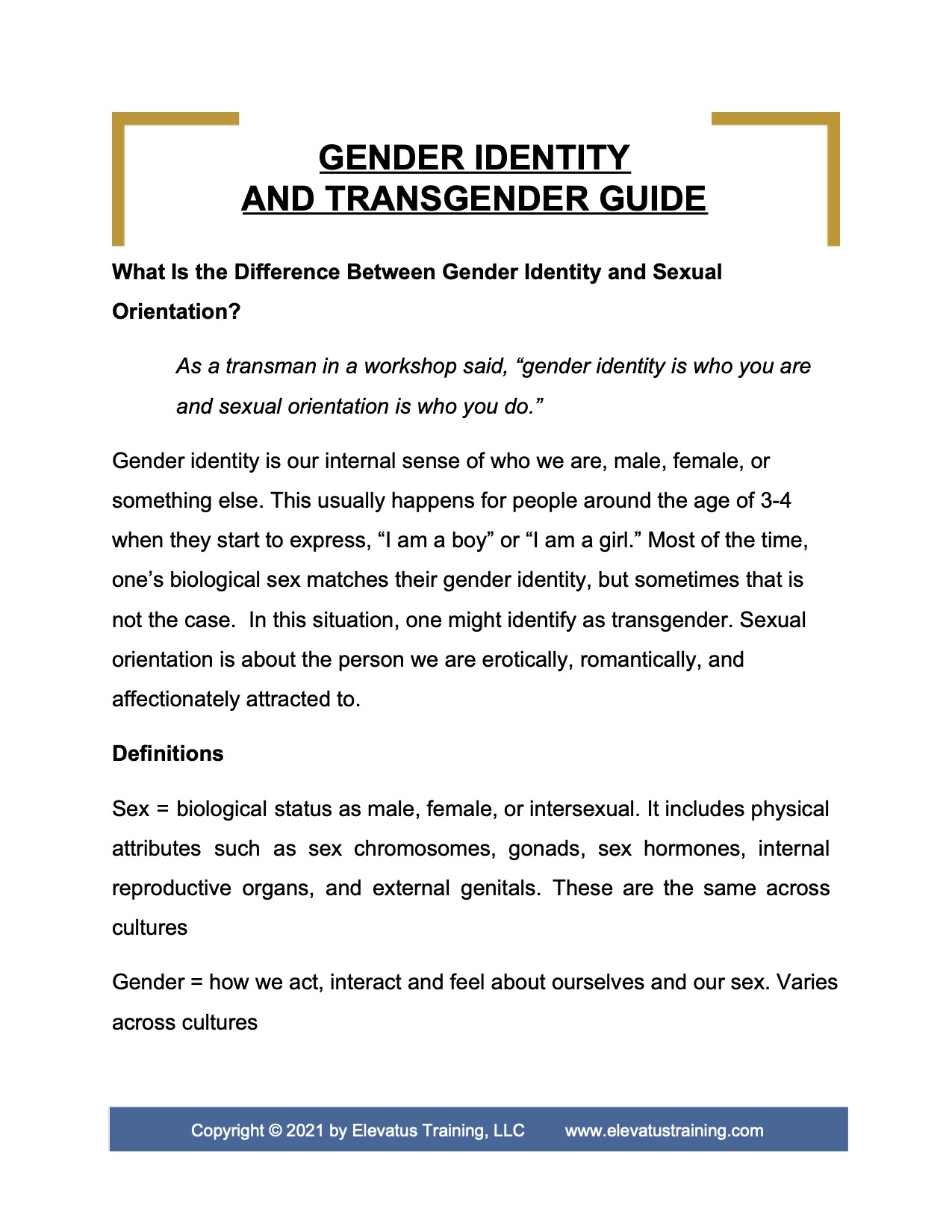
Clear and accessible, this handout explains the difference between gender identity and sexual orientation in everyday language. It defines key terms that sexuality educators and support staff need so they can talk about gender diversity accurately and respectfully.
This guide also offers practical, concrete tips for supporting people who are transgender, including:
- Using respectful language and avoiding slurs or intrusive questions
- Asking for and honoring people’s names and pronouns
- Never “outing” someone without their permission
- Using inclusive language when teaching about bodies and sexual parts
- Remembering that people with developmental disabilities can also be transgender and may benefit from LGBTQ+ or “rainbow” support groups
Designed for use in sexuality education, staff training, and direct support work, this resource helps professionals create safer, more affirming spaces for transgender and gender-diverse people.
Ideal for: sexuality educators, direct support professionals, clinicians, and family members who want to better understand gender identity, use inclusive language, and support the rights and dignity of transgender people, including those with intellectual and developmental disabilities.
Note: This document description was co-created with AI and reviewed by the Elevatus team for accuracy.
Ready to take action?
- Browse Elevatus Curricula & Online Workshop Series
- Become a Sexuality Educator
- Complete One of Our Self-Study Courses
- Register for Upcoming Workshops
By Katherine McLaughlin
Katherine McLaughlin, M.Ed., AASECT Certified Sexuality Educator, is the Founder, CEO, and Lead Trainer for Elevatus Training. She has been a sexuality educator and trainer for over 30 years. As a national expert on sexuality and intellectual and developmental disabilities, she trains professionals and parents, as well as people with I/DD, to become sexual self-advocates and peer sexuality educators.
