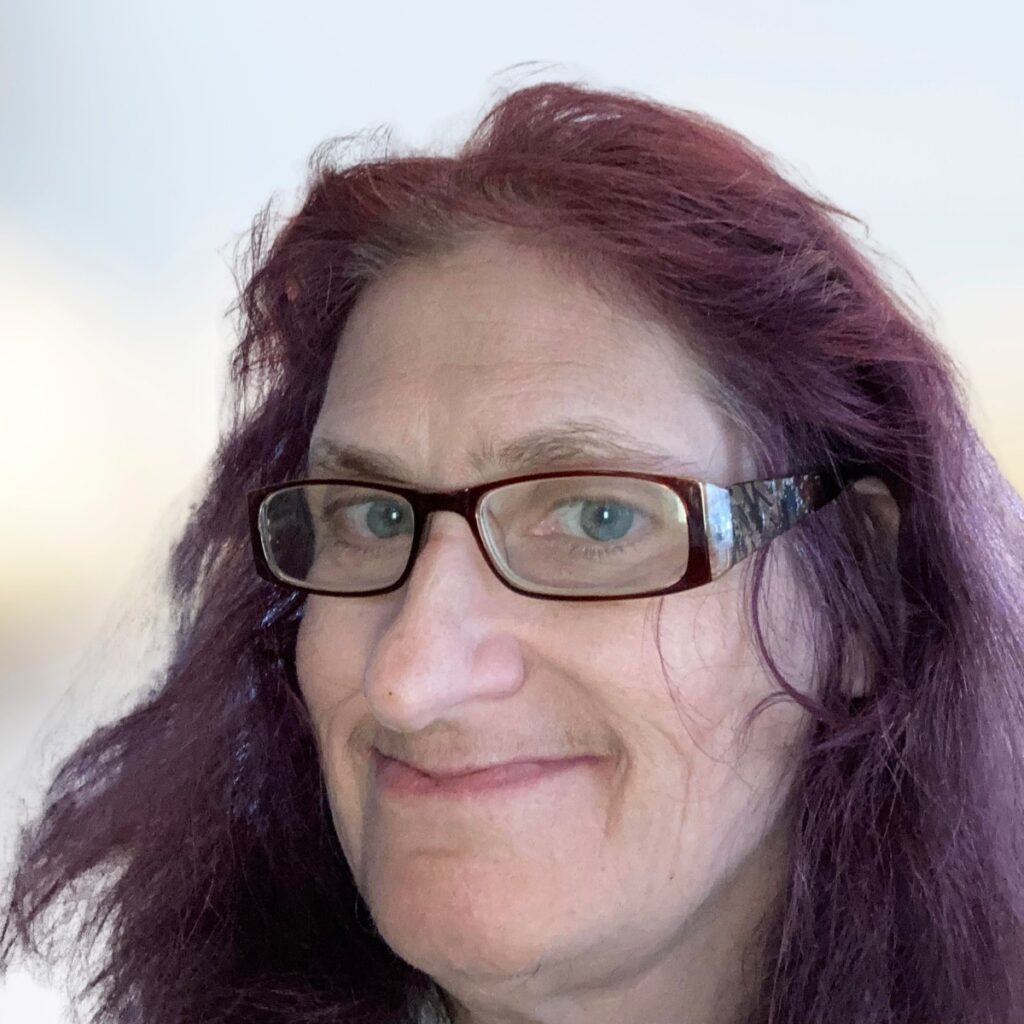
Tina Fitzgerald is a disability rights self-advocate who works to promote understanding of sexuality, healthy relationships, and safety for people with intellectual and developmental disabilities. She is also an Elevatus Training Adjuct Trainer. Drawing on her personal and professional experience, she emphasizes the importance of open education, informed choice, and challenging stigma around disability and sexuality. Read the full interview below to learn more about her perspective and work.
Tina, can you tell us a little bit about yourself?
My Name is Tina Fitzgerald, and I am a self-advocate. I am 61 years old and have worked in the area of disability rights for many, many years. In the past, I have been a service coordinator, advocate for housing, and taught basic independent living skills. I’ve done a lot of things. Now, I believe it’s the time in my life to bring out important issues. I focus my work on sexuality, transportation, and domestic violence. I also have a great passion for voting.
I was married for 30 years when my husband passed away. We were both disabled and trailblazers in the fact that we wanted to have our independent lives and a family. Unfortunately, we did not have any children, but we had a very blessed life filled with friends, family, and great times. I believe that our greatest legacy is the fact that we purchased our own home, which I still live in today.
What made you want to help people with intellectual and developmental disabilities (I/DD) learn about healthy relationships and sexuality?
What made me want to teach people with I/DD about sex and sexuality is the fact that we struggled as a couple so hard getting infertility services or getting any acknowledgment of us being sexual beings. This is terrible because despite the disabilities you may have or abilities you may have, you have the right to be sexual to the best of your ability. Now, with the help of the education I have received, I tell my story and hopefully enlighten people about the ability to express themselves sexually and make their own choices.
What challenges do people with I/DD face when learning about relationships and sexuality?
The challenge that people with I/DD face is getting people to understand that we are sexual beings and, just like they were, we are born with needs and desires and should be allowed to express them. We don’t stop other people from expressing their sexuality. The fact that you have a disability just means you may have a different way of expressing it or a different way of understanding it, but the biggest challenges are other people trying to ignore or extinguish that part of your being.
What advice would you give to families or educators about supporting sexuality and healthy relationships education for people with I/DD?
I would say teach the individual with a disability all that they want to know. Knowing is a key to safety and expression. If someone knows how to safely behave in a sexual manner, and they know what is appropriate and inappropriate, then we have won a battle. Ignorance is not bliss. Or protection from the bad things that can happen in this world, if people know what’s right and wrong, then they can act on it, and they need to understand that this is all a part of the natural development and growth of people. So I tell them to buckle up and let’s go on an adventure and learn, and maybe when I’m teaching your child or the person, their guardian might learn something new too, you never know.
What changes would you like to see in how society approaches this topic?
I would like to see people just accept the naturalness of sexuality. If we behaved in a way that is accepting of people’s desire to know and understand their sexual nature, we would have a lot less pushback on learning. We don’t stop other people from learning just because we are different or, as a new term, neurodiversity (the natural variation in how people’s brains function). We still need to fully understand the feelings and emotions that drive us.
Tina is a co-presenter for our upcoming workshop, Tinder, Grindr, and More: Supporting People with I/DD Who Are Dating Online. Tina, why do you think this workshop is helpful for people supporting someone with I/DD?
As far as attending our wonderful dating app workshop, everyone should come. Everyone should know how to safely navigate the world of online dating. It’s the new way of meeting people and building relationships. It’s educational. It’s fun, and there are lessons to be learned for everyone, especially regarding being safe and having a safe place to meet people and choose the kind of person you would like to be in a relationship with. It’s a great way to make friends and meet people on these apps. So join us for an informative, fun afternoon; it’s great.
Key Takeaway:
Tina’s message is clear: Sexuality is a natural part of life for everyone — including people with intellectual and developmental disabilities. Access to respectful, comprehensive education promotes safety, dignity, self-advocacy, and quality of life.
Katherine McLaughlin, M.Ed., AASECT Certified Sexuality Educator, is the Founder, CEO, and Lead Trainer for Elevatus Training. She has been a sexuality educator and trainer for over 30 years. As a national expert on sexuality and intellectual and developmental disabilities, she trains professionals and parents, as well as people with I/DD, to become sexual self-advocates and peer sexuality educators.