Skip to content

home

Two adults with Down syndrome viewing a laptop, illustrating pornography education for people with intellectual and developmental disabilities.

When Someone You Support Is Watching Porn: A Guide for Parents and Staff Supporting People with I/DD

Most people with I/DD encounter pornography at some point, often with less preparation to understand what they are seeing than their peers. This guide helps parents and support professionals respond to that moment without panic and shows how to turn it into an ongoing conversation using pornography literacy. It also covers when pornography use crosses into a bigger concern that needs more than a conversation, and what agencies should have in place so staff and families are not figuring this out alone. Read more about: When Someone You Support Is Watching Porn: A Guide for Parents and Staff Supporting People with I/DD

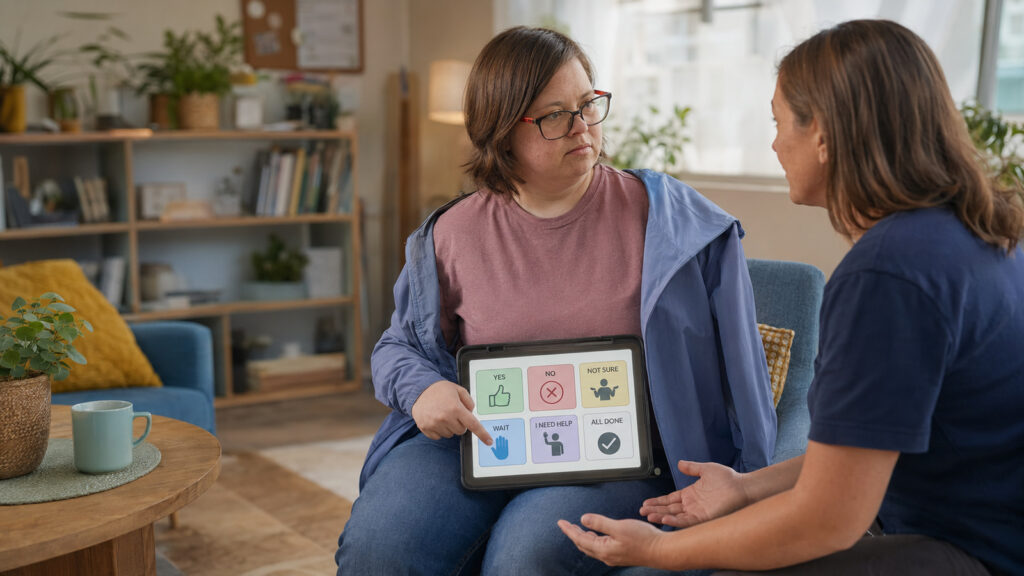
Consent training for people with IDD as an adult self-advocate uses an AAC device to ask a direct support professional to wait.

Teaching Consent to People with Intellectual and Developmental Disabilities: What Builds Real-Life Skills?

Consent is giving permission: saying yes, or agreeing to do something. Teaching it to people with I/DD rests on two ideas. There must be two yesses, and both must be freely chosen. Those skills grow through everyday practice, accessible communication, and supporters who ask before they act. Read more about: Teaching Consent to People with Intellectual and Developmental Disabilities: What Builds Real-Life Skills?

Shopping Cart
Scroll to Top