

Summary
This article is part of Elevatus Training’s Sexual Rights series. Download the full Sexual Rights Toolkit to explore all 10 rights with activities for self-advocates and supporters.
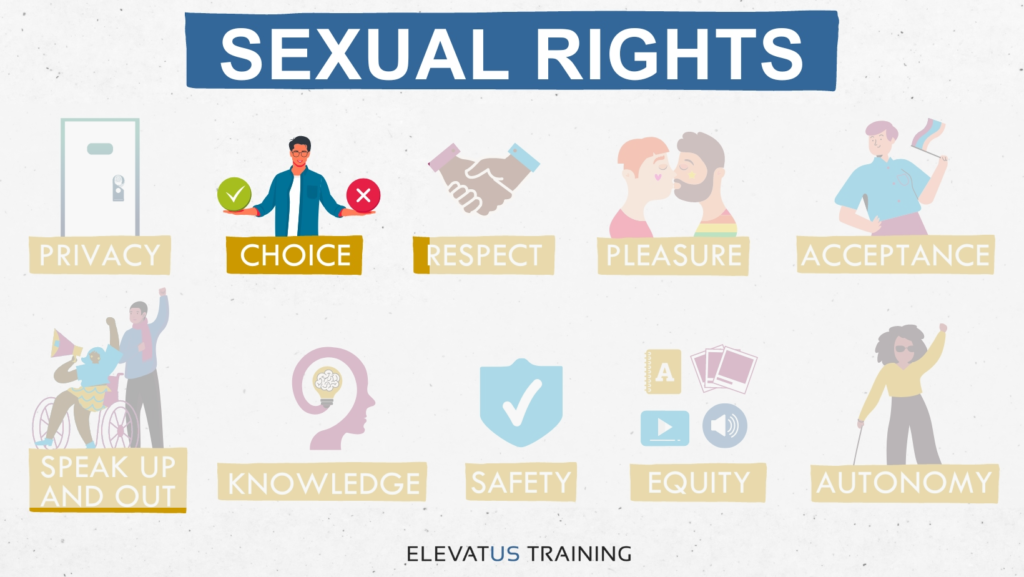
The ability to make your own choices is the cornerstone of an empowered life. That holds true for people with intellectual and developmental disabilities (I/DD), in general and in their sexuality. In this article, you will learn what the sexual right to choice means, where these rights come from, and why self-advocates have the right to make their own choice around important life decisions. We also discuss three ways you can support this right.
What Is the Sexual Right to Choice?
The sexual right to choice means people with intellectual and developmental disabilities (I/DD) have the right to make their own decisions about their sexuality — including who they date, whether they have sex, if and when they marry, and whether they have children. It is their body, mind, and life, and they get to decide what is right for them.
Sometimes, when I think about choice and having someone else make a choice for me, I can feel some relief. Sometimes I feel exhausted with how many choices I have to make, and sometimes I love the idea of saying, “Just tell me what to do.” I wouldn’t have to figure out what to make for dinner, what to buy at the grocery store, what outfit to wear, or whether to take that job.
But that would get old quickly and be disempowering. In reality, I like and need to make my own choices, and making choices is part of what is empowering about life. The same goes for people with I/DD, both in general and regarding their sexuality.
As the quotes below state, “everyone has the right to make their own choices about their sexuality.” Here are some specific examples of rights from self-advocates:
- “I have a right to choose who I want to date, where I go on dates, and to have privacy when I go on dates.”
- “I have the right to decide if I do or don’t want to have sex or sexual activity. I have a right to change my mind.”
- “I have a right to not go on dates and not have sexual intimacy.”
- “I can decide if I want to get married, when I want to marry, and who I want to marry.”
- “I have the right to decide if I want to have children or not. I can also decide when and how many children I want to have. I can decide how I want to have children whether it be by myself, naturally, adoption, surrogacy, or with medical help.”
Where These Sexual Rights Come From
The rights in this series are drawn from a Sexual Rights Statement developed by the Sex Education Implementation Oversight Committee to support the implementation of the Illinois law Public Act 101-0506. The committee, which included self-advocates, compiled what they believe are the rights. Self-advocates and the Illinois Self-Advocacy Alliance then created Easier-to-Understand versions of these statements, which have also been translated into Spanish, Simplified Chinese, and Polish. You can read the full Sexual Rights Statement on the Illinois Department of Human Services website.
Learning Objectives: Supporting Decision-Making for People with I/DD
For self-advocates: to know their body, life, and mind are theirs and to learn how to make decisions that are right for them.
For professionals: To believe that self-advocates can make their own decisions and gain skills in helping others make their own decisions.
3 Suggestions to Support Choice and Decision-Making
1. Believe people can make their own decisions.
Whether you are a self-advocate or someone who supports self-advocates, people with disabilities can make their own decisions. We all need to believe that, and if we don’t, ask ourselves why. We can even say this in our heads, “It is my body, mind, and life, and I get to decide what is right for me.” Or “It is their body, mind, and life, and they get to decide what is right for them.” This is a good reminder for all of us.
2. Learn or teach decision-making skills.
Decision-making is a skill, and learning or teaching these skills helps one explore the decision from many angles and therefore, make a thoughtful decision. This handout will show you the steps for making a decision. Taking a situation through these steps teaches how to use this model. It can be used alone or with someone else.
3. Know it is okay to make mistakes.
If we focus on making the right decision or the perfect decision, we may get stuck not making one at all. Part of living a full, healthy life is making mistakes and learning from them. This helps us grow. We can reflect on our experiences of what worked and what didn’t and see what we have learned from them. If we can forgive ourselves for making a mistake and reflect on the experience, we will probably, although not always, do something different next time.
Inspiration and End Result
People with I/DD will own and be in charge of their lives. This will help their self-esteem and level of happiness.
Self-Reflection and Call to Action
For Self-Advocates:
You are right! You do get to make your own choices about sexuality and healthy relationships. If you find you struggle to make decisions or want to get better at them, use the steps to make decisions. Also, reflect on how it went using the steps, what worked, what didn’t, and think about how you feel about the decision you made.
For Parents/Professionals:
Although it may feel a bit scary, helping people with I/DD make their own decisions is an important part of living a full life. Start out with easy decisions and offer choices so they get used to being in charge of their decisions. If they make a bigger decision that didn’t work out well, be there for them. Help them reflect on the situation and what they may have done differently next time. And always remind them that everyone makes mistakes, and it is a way to learn and grow.
Key Terms
- Choice is when you pick something you like from a bunch of options.
- Decision is when you make a choice or pick something over another.
- Dignity of risk means allowing people to try new things and make their own choices, even when there are risks or challenges. It’s about respecting their right to make decisions and learn from their experience.
- Consent is saying yes to something you want to do. You feel safe saying yes or no, and no one will pressure you or hurt you into saying yes.
- Self-advocate is a person with an intellectual or developmental disability who speaks up for their needs, rights, and interests.
Ready to take action?
- Browse Elevatus Curricula & Online Workshop Series
- Become a Sexuality Educator
- Complete One of Our Self-Study Courses
- Register for Upcoming Workshops
By Katherine McLaughlin
Katherine McLaughlin, M.Ed., AASECT Certified Sexuality Educator, is the Founder, CEO, and Lead Trainer for Elevatus Training. She has been a sexuality educator and trainer for over 30 years. As a national expert on sexuality and intellectual and developmental disabilities, she trains professionals and parents, as well as people with I/DD, to become sexual self-advocates and peer sexuality educators.
