

Summary
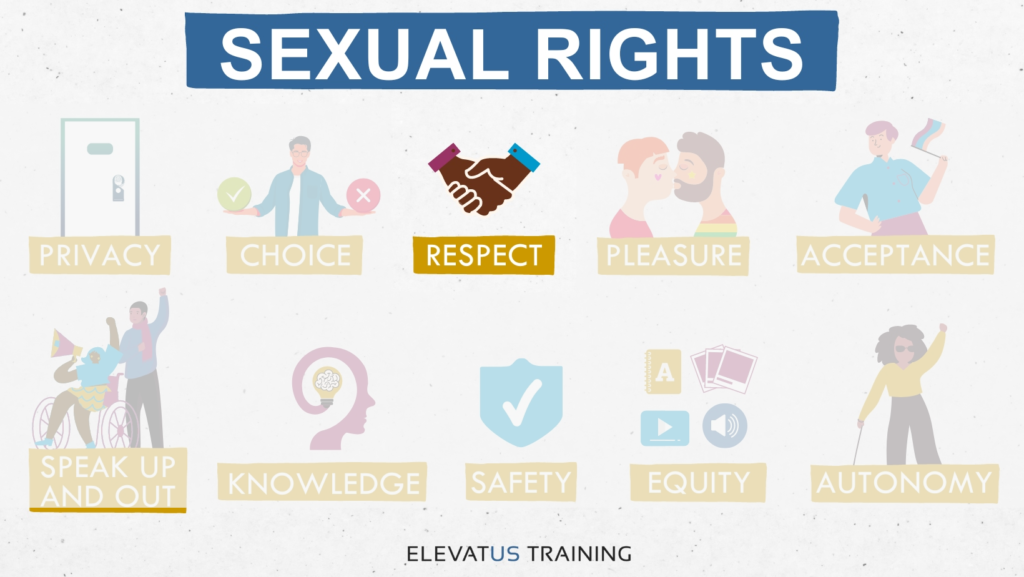
This article is part of Elevatus Training’s Sexual Rights series. Download the full Sexual Rights Toolkit to explore all 10 rights with activities for self-advocates and supporters.
Believing in someone’s right to choose is only half of it; respecting the actual choices they make is what completes it. For people with intellectual and developmental disabilities (I/DD), that respect is too often withheld. In this article, you will learn what the sexual right to respect means, as well as three ways you can show real respect for the choices self-advocates make.
What Is the Sexual Right to Respect?
The sexual right to respect means people with intellectual and developmental disabilities (I/DD) deserve to have the choices they make about their sexuality honored, not judged. It goes beyond believing they have the right to choose — it means respecting those choices, even when others disagree or worry the choice may be a mistake.
Self-advocates want the right to make their own choices and to be respected for them. We can say that we believe they have the right to choose, but do we also respect their choices, which takes it a bit further? They are asking that we not judge them for the choices they make.
- “I have a right to choose how I define my sexuality and sexual expression, and have those choices respected.”
- “I can choose what education, information, services and resources I want, and a right to have those choices respected.”
Where These Sexual Rights Come From
The rights in this series are drawn from a Sexual Rights Statement developed by the Sex Education Implementation Oversight Committee to support the implementation of the Illinois law Public Act 101-0506. The committee, which included self-advocates, compiled what they believe are the rights. Self-advocates and the Illinois Self-Advocacy Alliance then created Easier-to-Understand versions of these statements, which have also been translated into Spanish, Simplified Chinese, and Polish. You can read the full Sexual Rights Statement on the Illinois Department of Human Services website.
Learning Objective: Show Respect for the Choices Self-Advocates Make
Self-advocates feel respected for the choices that they make in their lives. Professionals and family members respect all choices made, even if they turn out to be a “mistake.”
3 Suggestions to Support Respect
1. When do you feel respected, and when don’t you?
Exploring this question is really helpful. Since respect can be a feeling, how do we describe concrete ways to show respect? I have asked self-advocates this question, and they have said:
I feel disrespected when:
- People pretend to understand me, but they don’t.
- People ask, “Who are you here with?” assuming I couldn’t ever be alone.
- Being ignored.
- People cut me off when I am talking.
I feel respected when:
- People speak kindly and listen to my needs.
- Validate me by showing me they see me and believe me.
- When I answer a question, they accept my answer.
- When I make a decision, they accept my decision.
2. Let me make mistakes.
Sometimes professionals or family members want to protect us from ever feeling pain or sadness, so they make sure we don’t ever make a mistake. Self-advocates have asked others to let them make mistakes because that is how we learn and grow.
As hard as that can be, professionals and family members may have to let go. In the disability community, self-advocates often speak of wanting the dignity of risk. Dignity of risk means being able to make a choice even if it could have negative consequences.
3. Speak up if you feel disrespected.
I believe that the most effective way to teach others about respect is to call them in, not call them out. “Calling a person in” means assuming good intentions, but also being clear about how their words or acts have had an impact and telling them, kindly, how it felt. “Calling someone out” uses public humiliation to make the person feel bad and can shut them down.
An example of calling someone in is to say, “You may not have meant to do this, but when you cut me off while I am talking, I feel upset. Please let me finish my sentences.” Or “When you talk to me in that tone of voice, I feel upset. I am an adult and want to be talked to that way.”
You are describing the hurtful behavior or words, telling them how you feel, and then explaining how they can fix it. Sometimes people will respond with, “Well, that wasn’t my intention.” We can say, “Yes, it may not have been your intention, but it did have an impact on me that was hurtful.”
Inspiration and End Result
Self-advocates do not feel judged, ashamed, or hurt when they are exploring their sexuality and choices.
Self-Reflection and Call to Action
For Self-Advocates
Your choices and decisions deserve to be respected, and you also have the right to tell people when they are treating you disrespectfully. We can be kind when we tell people how we feel.
For Professionals/Family Members
Ask yourself:
- Do I respect the choices and decisions of the person I support and care about?
- How do I show respect for choices?
- Do I let them make mistakes and give them the dignity to take risks? If not, why?
Key Terms
- Respect means treating others the way you’d like to be treated. It’s when you show that you care about other people’s feelings and treat them with politeness and fairness. It’s important because it helps people get along and feel valued.
- Disrespected means when someone doesn’t treat you or someone else nicely or kindly.
- Dignity of risk means allowing people to try new things and make their own choices, even when there are risks or challenges. It’s about respecting their right to make decisions and learn from their experience.
- Intention is like a plan or a goal. It’s what you want to do or achieve. It’s the thing you have in your mind that you aim to make happen.
- Self-advocate is a person with an intellectual or developmental disability who speaks up for their needs, rights, and interests.
Ready to take action?
- Browse Elevatus Curricula & Online Workshop Series
- Become a Sexuality Educator
- Complete One of Our Self-Study Courses
- Register for Upcoming Workshops
By Katherine McLaughlin
Katherine McLaughlin, M.Ed., AASECT Certified Sexuality Educator, is the Founder, CEO, and Lead Trainer for Elevatus Training. She has been a sexuality educator and trainer for over 30 years. As a national expert on sexuality and intellectual and developmental disabilities, she trains professionals and parents, as well as people with I/DD, to become sexual self-advocates and peer sexuality educators.
