

Summary
By the end of this article, you will understand why family acceptance matters for LGBTQ+ people with intellectual and developmental disabilities, what to do when families struggle to provide that acceptance, and how to help build a supportive chosen family.
“My family disowned me because I am LGBTQ+ and have an intellectual disability. They did not treat me with respect and dignity. During my life, people have tried to discriminate against me, but I have overcome it. I’m not afraid to speak out and to be who I want to be, the person that I am now.
“We who are LGBTQ+ with intellectual and developmental disabilities have the right to be who we want to be and be happy in our lives. We should be able to do what we want to do.”
— Pauline Bosma
Every person deserves to be loved, respected, and accepted for who they are. For LGBTQ+ people with intellectual and developmental disabilities, that acceptance — especially from family — can make a profound difference in their wellbeing, safety, and sense of self.
For many years, Pauline Bosma and Oscar Hughes have been leading trainings and workshops about supporting LGBTQ+ people with intellectual and developmental disabilities. Unfortunately, the most common questions they continue to receive are about unaccepting families:
- “What can I do to help a parent love and accept their LGBTQ+ child?”
- “How can a family learn to support the LGBTQ+ identity of their family member?”
Many families are accepting and deeply supportive. But not all are — and when they are not, supporters play a critical role. Here is what you can do.
Why Family Acceptance Is Complicated
Family rejection of an LGBTQ+ loved one with an intellectual or developmental disability can take many forms. Some family members do not want their loved one to face additional discrimination and believe that discouraging their LGBTQ+ identity is a form of protection. Others may not believe that their loved one is truly LGBTQ+. And some families hold strong negative beliefs or fears related to gender and sexual diversity that lead them to try to prevent their family member from living as their true self.
While supporters cannot force families to change, there are meaningful ways to help.
Promote Self-Advocacy
Being able to advocate for yourself is a valuable skill — and for LGBTQ+ people with disabilities, it can be essential. Self-advocacy means to speak up for who you are and what you need. This might look like asking to be called by your name and pronouns, seeking support with dating, or telling your family who you are and why it matters.
When we intentionally build self-advocacy skills for all people with I/DD, LGBTQ+ individuals are better prepared to speak up for themselves — in their families, in their communities, and in the systems that serve them.
Share Resources
Many online resources can support family members in becoming more understanding and accepting of their LGBTQ+ loved ones. Some include personal stories and videos showing how families — including those from diverse religious and cultural backgrounds — have grown in their acceptance over time.
Helpful resources for families include:
- PFLAG — pflag.org
- The Family Acceptance Project — familyproject.sfsu.edu
- My Kid Is Gay — mykidisgay.com
- The Rainbow Guidebook — created by Pauline Bosma and Oscar Hughes — includes a letter to family and friends written by LGBTQ+ adults with disabilities.
Give It Time
It can be surprising or overwhelming for family members to learn that their loved one is LGBTQ+. Many families become more understanding and accepting over time — sometimes within days, sometimes over many years.
While families may need time to learn and grow, LGBTQ+ people with disabilities deserve respect and support right now. When someone is experiencing misunderstanding or rejection from their family, they need friends and supporters who can be there for them. If a person is experiencing bullying, harassment, or emotional abuse because of their LGBTQ+ identity, supporters should help them identify safe people and safe places where they can receive support.
Find and Build a Chosen Family
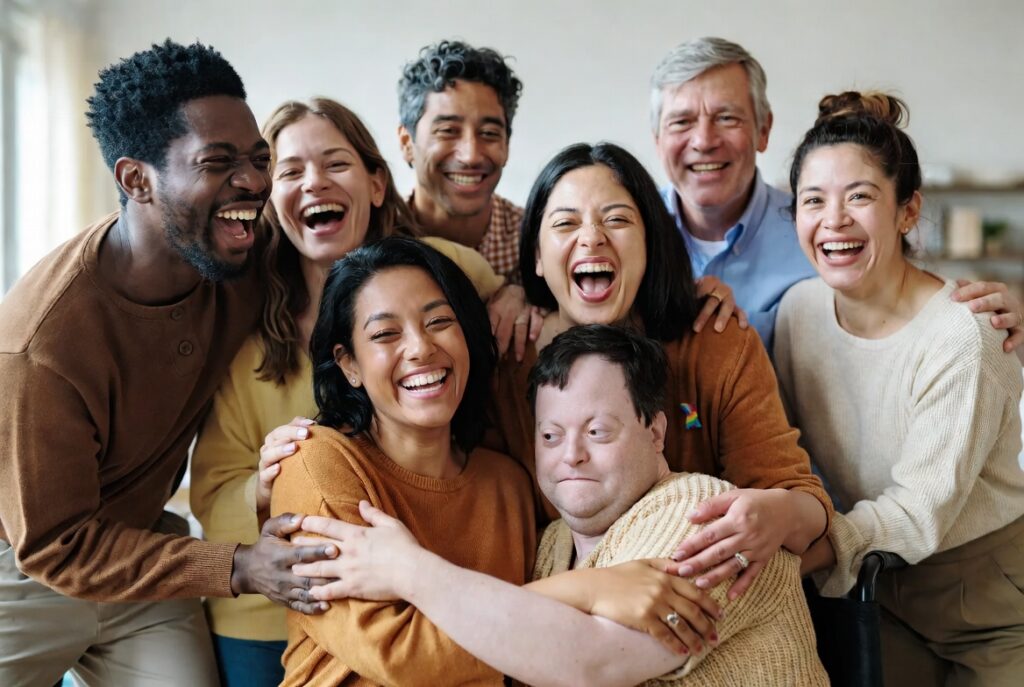
Biological family members do not have to be our only — or our closest — family. Many LGBTQ+ people build chosen families: circles of loved ones who accept and celebrate them for who they are.
LGBTQ+ people with intellectual and developmental disabilities should have every opportunity to form a supportive network that lifts them up and shows them love.
“Sometimes you choose family and friends that are in your life because they treat you with respect and dignity, the way you should be treated. Your chosen family can be anybody that you want in your circle. In my circle, my family is all the members of the Rainbow Support Groups that I have created and all the people in my network that I have connected with throughout the years.”
— Pauline Bosma
Even when biological families struggle to provide acceptance, supporters can help LGBTQ+ people with I/DD build community, advocate for themselves, and find people who celebrate them for exactly who they are.
The Voices Behind This Article
Pauline Bosma is the founder and coordinator of the Rainbow Support Groups, a network of support groups for self-advocates who are members of both the intellectual and developmental disability community and the LGBTQ+ community. Pauline identifies as a transgender woman who is labeled with an intellectual disability. She has extensive experience offering training and presentations on issues related to the LGBTQ+ and disability community. Pauline works for Massachusetts Advocates Standing Strong, where she continues her work with Rainbow, contributes to the Awareness & Action peer-to-peer training program, and works with the Mass Rights for Change project to support people with disabilities who have survived sexual abuse.

Oscar Hughes, PhD, started his career as a special education teacher for high school and transition-age students with intellectual and developmental disabilities, where he worked to create a classroom and school environment inclusive of trans and gender-diverse students. He also advised the high school’s Gender and Sexuality Alliance (GSA), which included students with and without disabilities. Oscar has a PhD in special education from Boston University, where his research focused on supporting LGBTQ+ adults with intellectual and developmental disabilities to express their gender and sexuality. He works part-time as the assistant to the Rainbow Support Groups and as an adjunct trainer for Elevatus Training.

Ready to take action?
- Browse Elevatus Curricula & Online Workshop Series
- Become a Sexuality Educator
- Complete One of Our Self-Study Courses
- Register for Upcoming Workshops
By Katherine McLaughlin
Katherine McLaughlin, M.Ed., AASECT Certified Sexuality Educator, is the Founder, CEO, and Lead Trainer for Elevatus Training. She has been a sexuality educator and trainer for over 30 years. As a national expert on sexuality and intellectual and developmental disabilities, she trains professionals and parents, as well as people with I/DD, to become sexual self-advocates and peer sexuality educators.
